Hakone
Hakone is a mountain resort town in Kanagawa Prefecture, just over an hour from Tokyo, built around the volcanic caldera that also feeds its famous hot springs. It’s a small area, but there’s a lot to do: you can soak in centuries-old onsen ryokans, ride a switchback railway and a ropeway over an active volcanic valley at Owakudani, cruise Lake Ashi on a replica pirate ship past a torii gate rising from the water, wander world-class art museums like the Hakone Open-Air Museum and Pola set right into the forest, and, on a clear day, catch a classic view of Mt. Fuji from the lakeshore.
Overview
Explore
- Hakone Shrine
- Lake Ashi Pirate Ship Cruise
- Hakone Ropeway
- Hakone Open Air Museum
- Odawara Castle
- Other museums:
Narukawa Art Museum
Pola Museum of Art
Eat
- Kaiseki meal in your ryokan or hotel
- Hatsuhana Soba Honten
- Unagi Tei Tomoei
- Roryuan (unagi)
- Itoh Dining by Nobu (teppanyaki)
Where to Stay
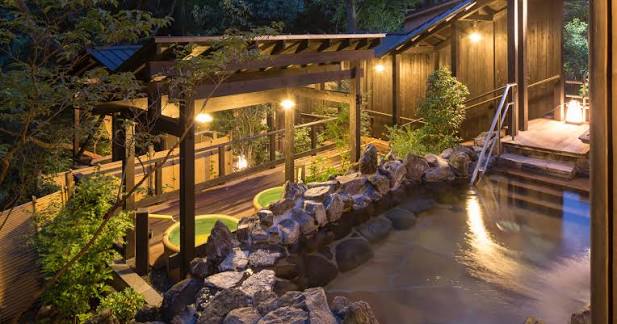
I would recommend staying in a ryokan or hotel with an onsen. Hakone sits inside the caldera of a still-active volcanic system where water seeps underground, collects in aquifers, and gets heated by nearby magma before rising back up through cracks in the earth as hot springs. Hakone officially has seventeen distinct natural hot spring sources, known as the Hakone Ju-nana-yu, and different zones tap into different volcanic strata, so the water comes out rich in sulfur, sodium chloride, calcium, or alkaline minerals depending on where you are. With a ryokan stay, you can also experience a beautiful kaiseki meal, often served in your room.
How to Get There
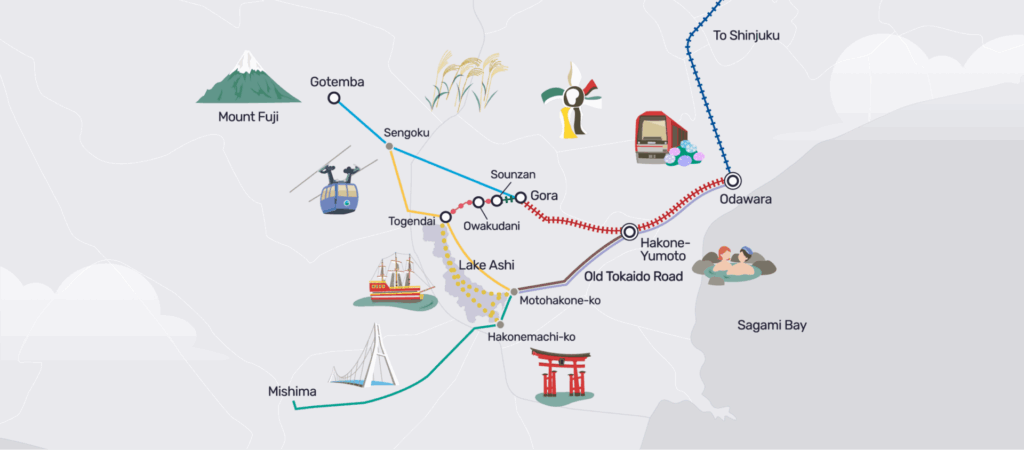
Before your trip, purchase a Hakone Free Pass (Odakyu Limited Express Romancecar requires an extra fee) — it covers the Hakone Tozan Train, Hakone Ropeway, Hakone Tozan Cable Car, the Hakone Sightseeing Cruise, and local buses – plus a round-trip ticket on the Odakyu Line. The pass is valid for 2 or 3 days and gets discounts at some museums. From Shinjuku Station, take the train (about 85 min direct) to Hakone-Yumoto.
Alternatively, you can take the Tokaido Shinkansen from Shinagawa Station to Odawara Station (about 27 minutes) if you’d like to visit Odawara Castle. From Odawara, you can transfer to the Hakone Tozan train or bus.
What to See
Spending two or three days in Hakone is enough to see most of the sights at a relaxed pace. The Hakone Loop is a classic course that many people take. After arriving at Hakone-Yumoto Station, follow the signs to the bus stop and board the R Hakone Shindo Line bound for Motohakone. The 35-minute ride winds through forested mountain roads before arriving at Motohakone Port.
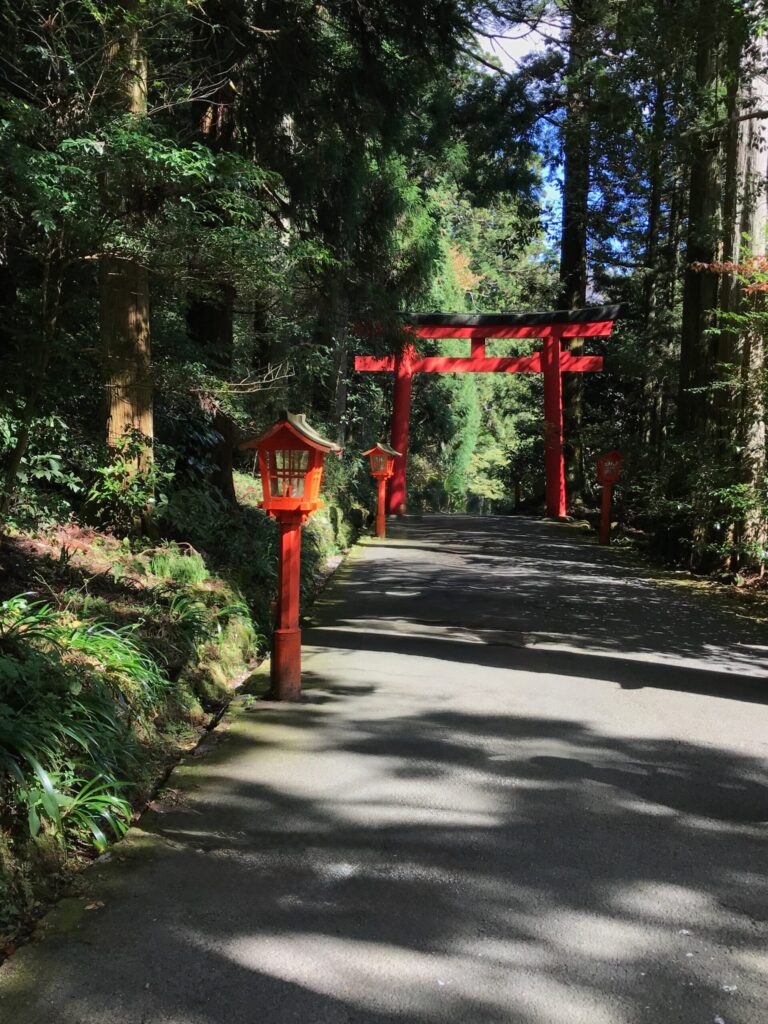
From there, it’s just a short walk to Hakone Shrine.
Hakone Shrine
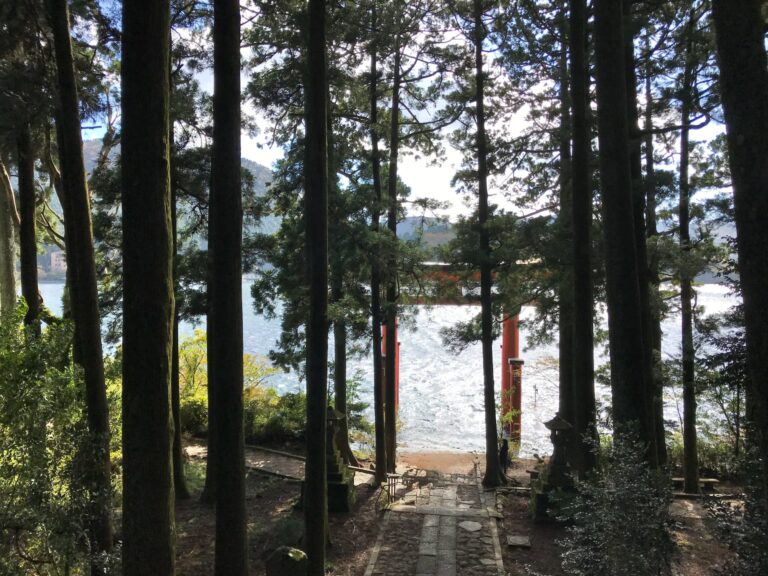
Hakone Shrine (箱根神社, Hakone Jinja) was founded in the Nara period (757 AD). It enshrines three deities known as “Hakone-no-Okami.” The shrine stands at the foot of Mount Hakone along the shores of Lake Ashinoko. The shrine buildings are hidden in the dense forest, but are marked by huge tori gates. By the nearby lake, there stands a large torii gate known as the “Torii of Peace”, appearing to float on Lake Ashi. On clear days, Mount Fuji is visible in the distance.
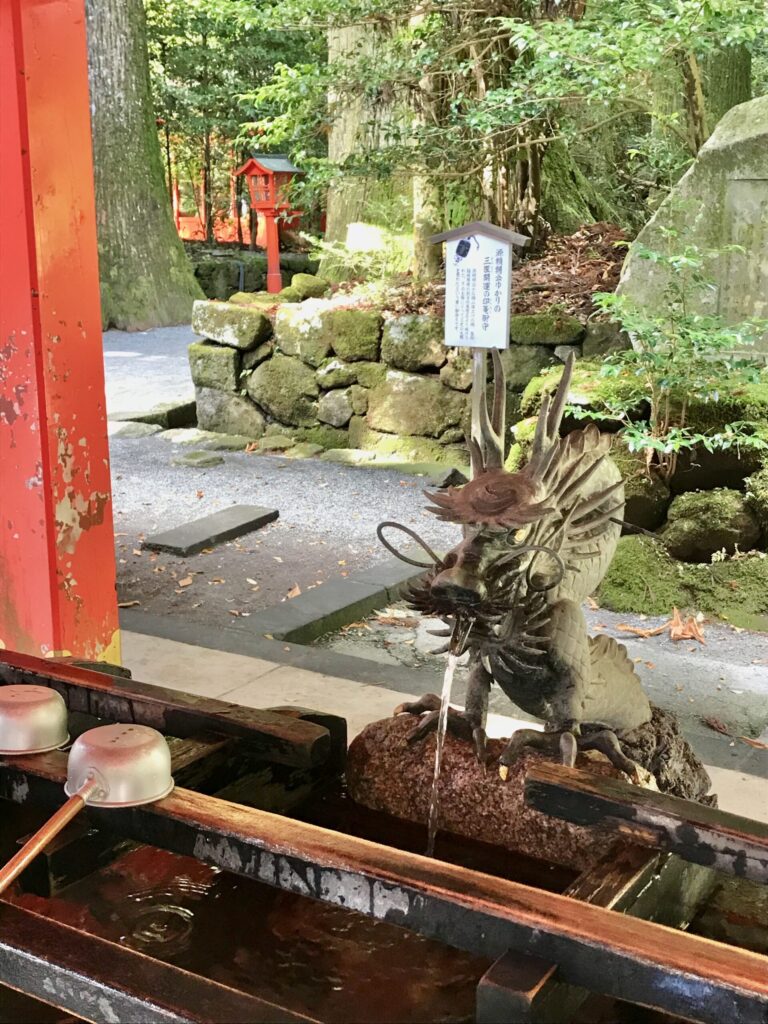
You’ll notice many dragon motifs as you walk through the shrine. According to legend, a nine-headed dragon once lived in Lake Ashi and caused trouble for nearby villages. A priest eventually subdued the creature and enshrined it at the nearby Kuzuryu Shrine Hongu, transforming it into a guardian deity. Today, the dragon is believed to protect the lake and represent the life-giving power of water.
Lake Ashi Pirate Ship Cruise
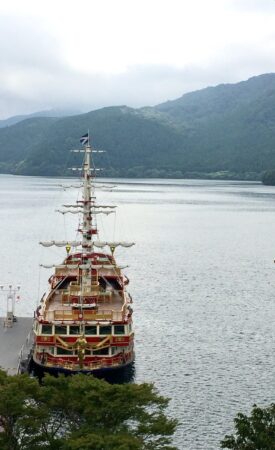
After the shrine, head to Motohakone Port to board the famous Hakone Sightseeing/Pirarte Ship Cruise. It takes you to the Northern tip of Lake Ashi to Togendai Port in about 30 minutes. Note: the cruise is included in the Digital Hakone Freepass.
Hakone Ropeway
After disembarking at Togendai Port, board the Hakone Ropeway toward Owakudani, the still active volcanic valley. This section of the ropeway is famous for offering sweeping aerial views over Lake Ashi with Mount Fuji rising in the background.
Stepping off the ropeway at Owakudani, you’re immediately met with the sharp scent of sulfur and steam billowing up from the hillside. The valley formed roughly 3,000 years ago during a volcanic eruption, and its name — “Great Boiling Valley” — fits the scene perfectly, as the ground still hisses and steams with raw geothermal activity. A handful of viewing platforms let you take in the dramatic landscape up close. Owakudani is one of the major sources of the hot springs water in Hakone and it’s waters are piped to various Hakone facilities. Black eggs cooked in one of the steaming vents are a local specialty of Owakudani. Eating one of the black eggs is said to extend your life for 7 years! Another local specialty is black soft-serve ice-cream made with bamboo charcoal.
Hakone Open Air Museum
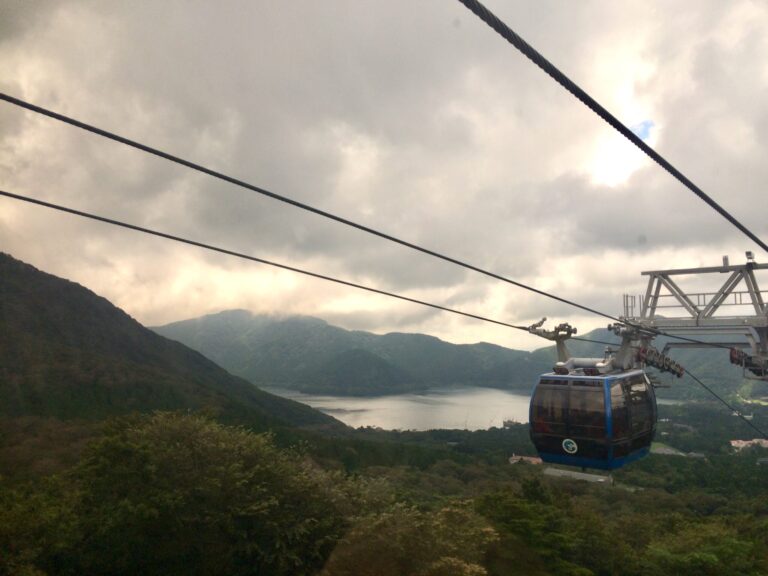
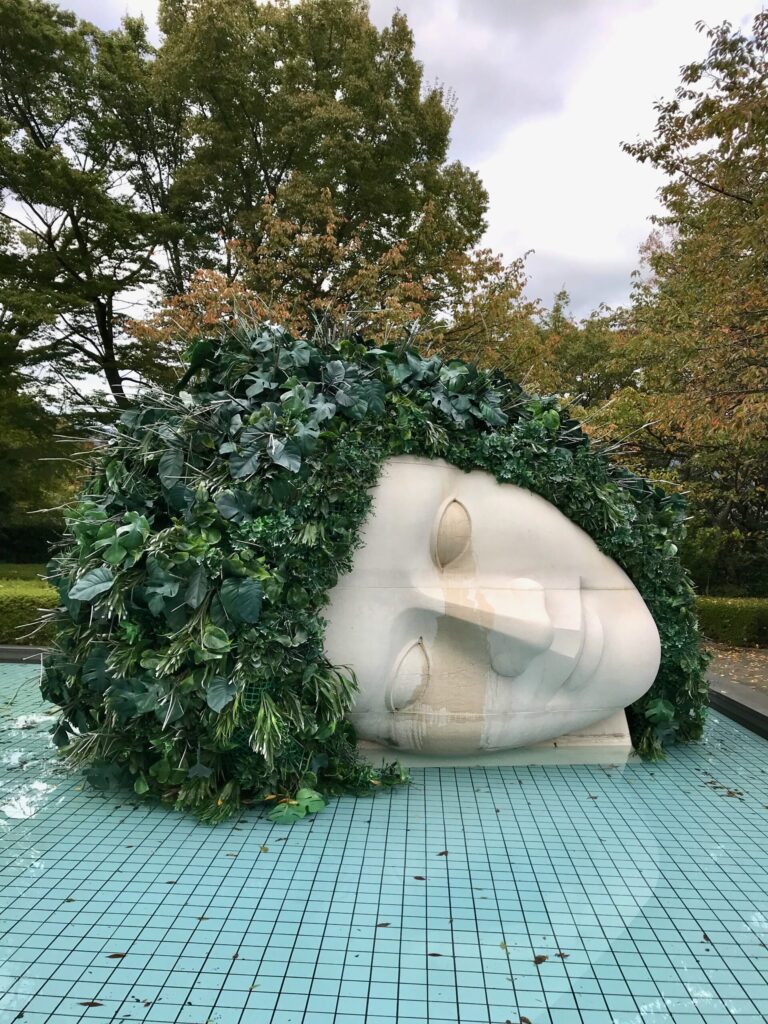
From Owakudani, stay on the Hakone Ropeway to Sounzan Station. There, switch to the Hakone Tozan Cable Car, which descends the mountain to Gora, then transfer to the Hakone Tozan Train — known for its unique switchback tracks and stunning mountain scenery. Get off at Chokokunomori Station, just a short walk from the Hakone Open-Air Museum.
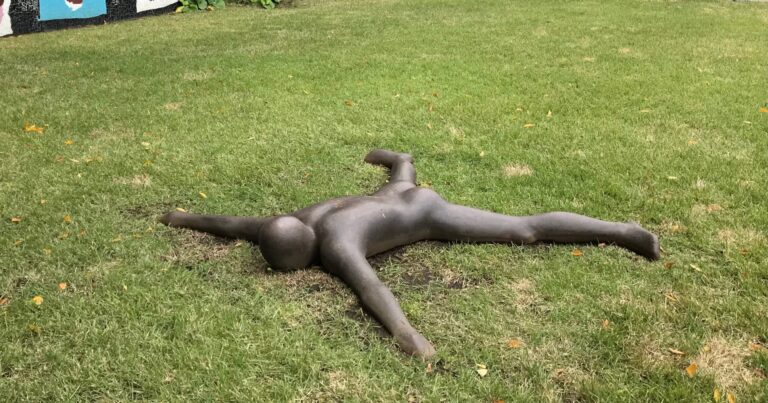
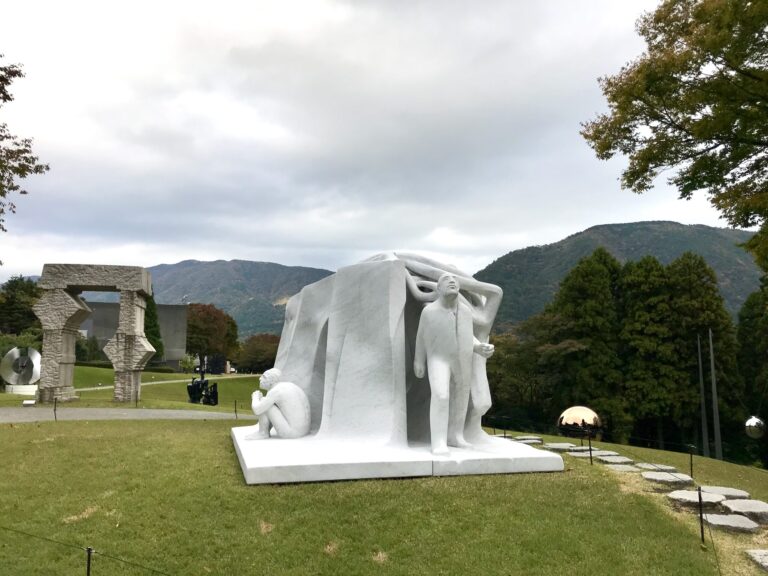
The Open Air Museum was one of Japan’s first outdoor museums. Spread across 70,000-square-meter grounds, the museum contains both indoor and outdoor exhibition areas filled with large sculptures, installations, and paintings.
Hakone Yuryo
If your hotel did not have an onsen, you still have a chance to get the Hakone onsen experience. Head to Hakone Yuryo after the Open Air Museum. From the museum, take the Hakone Tozan Train downhill toward Hakone-Yumoto (roughly 15 minutes); there’s a free shuttle to the onsen that takes around 30-40 minutes.